
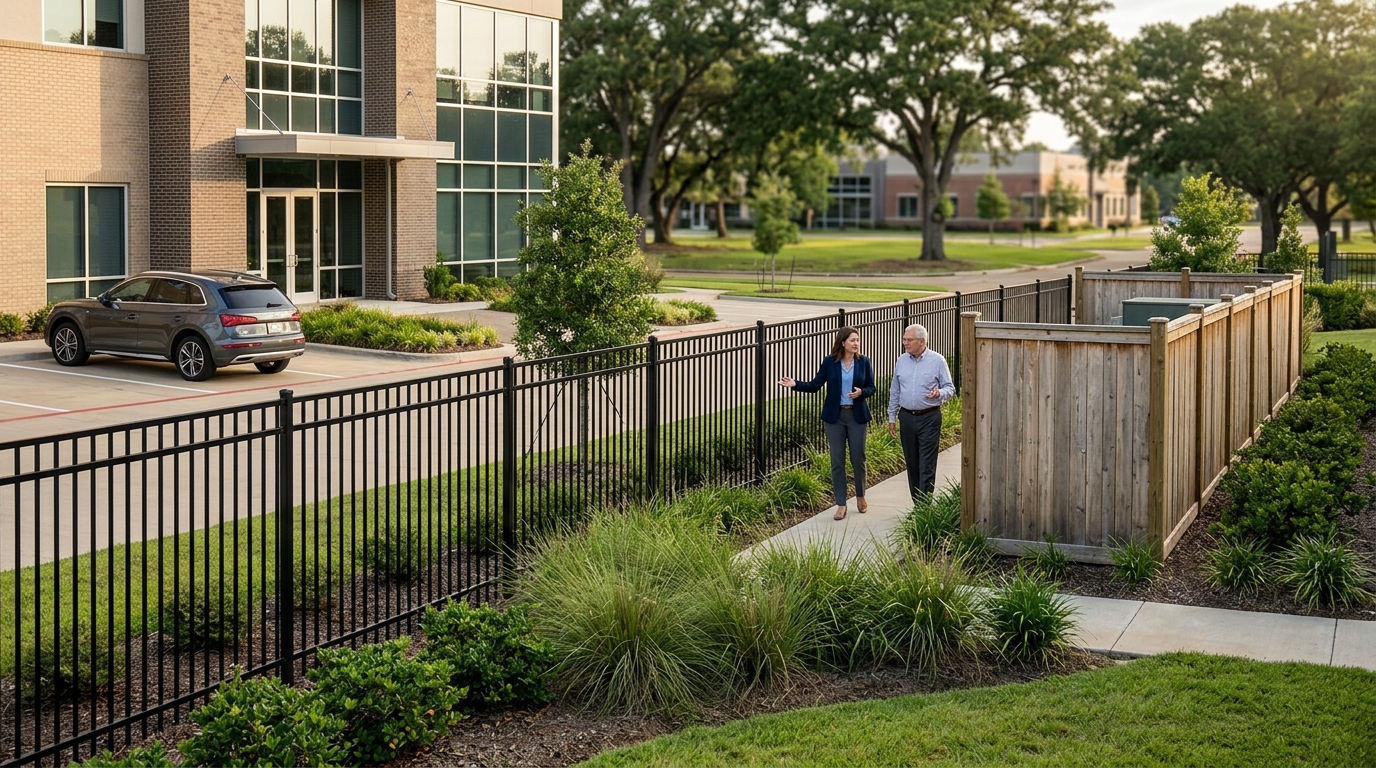
Aluminum fencing offers lower maintenance, longer lifespan, and consistent aesthetics compared to wood, making it a superior choice for commercial properties. This guide examines the key benefits of aluminum versus wood across maintenance, durability, appearance, and security to help facility managers and business owners make informed decisions. For additional details, review the About Vickers Fence Vickers.
Maintenance Requirements
Commercial property managers face tight budgets and limited staff for ongoing upkeep. The maintenance profile of a fence material directly impacts operational costs over the asset's life. Understanding these differences is critical for long-term financial planning. For additional details, review the Fence Installation amp Repair.
Wood Fencing Maintenance
Wood is a natural material that reacts to environmental changes. It requires regular treatment to prevent decay, rot, and insect damage. Owners must inspect wood fences for splintering, warping, and moisture absorption. These inspections and treatments consume labor hours that could be spent on other facility tasks. For additional details, review the Gates in Greenwood Louisiana.
Staining or painting wood fences is a recurring expense. This process typically needs to be repeated every two to five years depending on climate and exposure. In humid regions like northwest Louisiana, moisture accelerates the degradation of untreated wood. The cost of labor and materials for refinishing adds up significantly over a decade.
Aluminum Fencing Maintenance
Aluminum is a non-porous metal that does not absorb water. It is inherently resistant to rot, rust, and insect infestation. The primary maintenance task for aluminum fencing is occasional cleaning with water and mild detergent to remove dust or debris. This simple process preserves the finish without requiring specialized chemicals or equipment.
Unlike wood, aluminum does not require staining, painting, or sealing. The factory-applied finish is designed to withstand UV exposure and weathering. This low-maintenance characteristic makes aluminum ideal for commercial sites where staff are focused on core business operations rather than facility upkeep.
Durability and Longevity
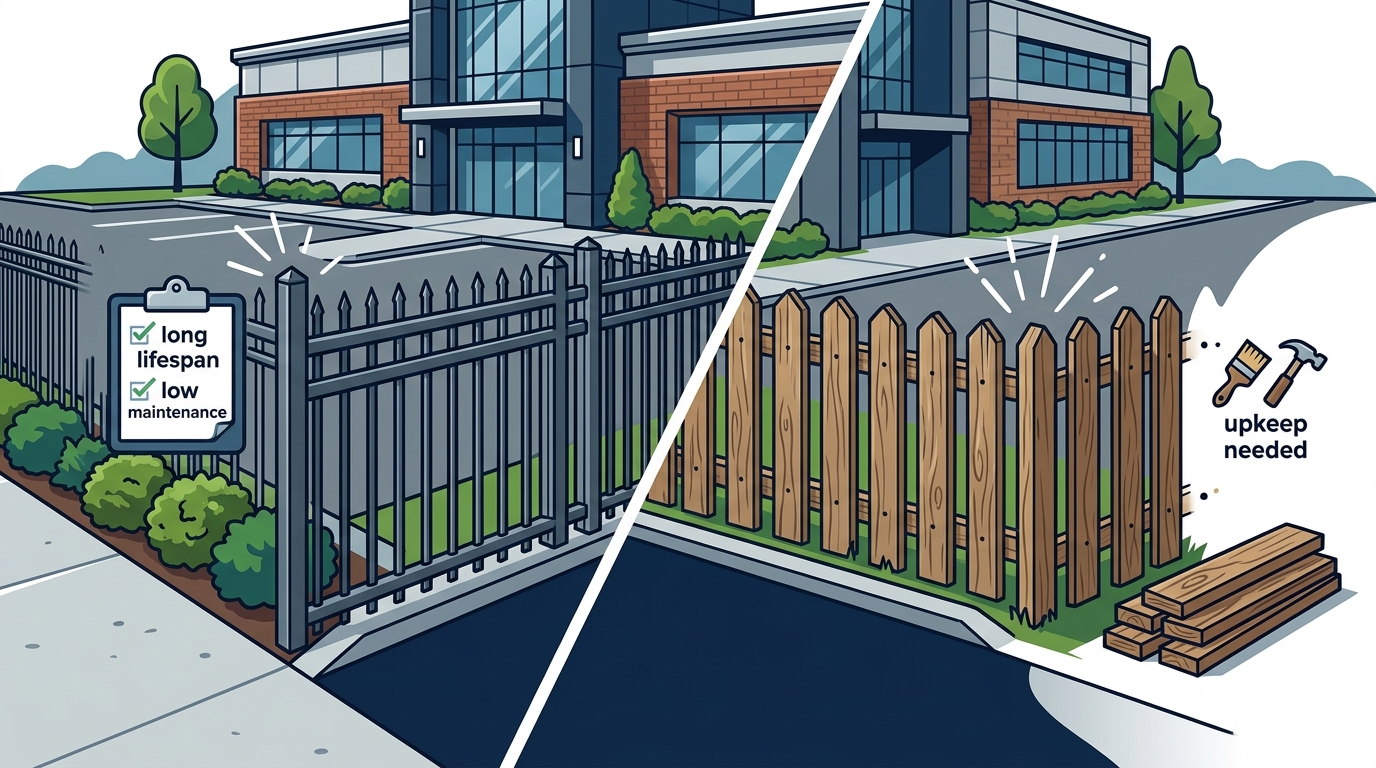
Commercial fences must withstand heavy use, weather extremes, and potential impacts. Durability determines how long the fence remains functional and structurally sound. Longevity affects the total cost of ownership and the frequency of replacement projects.
Wood Durability Challenges
Wood is susceptible to environmental stressors. Prolonged exposure to sun, rain, and temperature fluctuations causes wood to expand and contract. This movement can lead to cracking, splitting, and joint failure over time. In areas with high humidity, wood is also prone to mold and mildew growth, which weakens the structural integrity.
The lifespan of a wood fence varies by species and treatment. Untreated wood may last only a few years, while pressure-treated wood can last longer but still requires protection. Even with maintenance, wood fences generally have a shorter service life than metal alternatives. This shorter lifespan means more frequent replacement cycles and associated disruption to the property.
Aluminum Durability Advantages
Aluminum is a strong, lightweight metal that resists corrosion. It does not rot, warp, or crack under normal weather conditions. The material maintains its structural strength over decades of use. This inherent durability allows aluminum fences to perform reliably in diverse climates, including the humid conditions of East Texas and northwest Louisiana.
Aluminum fences are also resistant to impact damage. While they can dent if struck by heavy objects, they do not splinter or break like wood. This resilience makes them suitable for high-traffic commercial areas. The long lifespan of aluminum fencing reduces the need for frequent replacements, providing a stable and predictable asset for commercial properties.
Professional Appearance
Commercial properties rely on curb appeal to attract customers and convey professionalism. The visual consistency of a fence contributes to the overall brand image. A well-maintained fence signals that the business is attentive to detail and quality.
Wood Aesthetic Considerations
Wood offers a traditional, natural look that suits certain architectural styles. However, wood is prone to fading and color changes over time. Without consistent maintenance, wood fences can appear weathered and uneven. This inconsistency can detract from the professional image of a commercial property. The natural grain of wood is appealing but requires ongoing care to maintain a uniform appearance.
Aluminum Aesthetic Consistency
Aluminum fencing provides a clean, modern look with consistent lines. The material holds its color and finish over time, ensuring a uniform appearance. This consistency is valuable for commercial properties that need to maintain a polished look. Aluminum fences are available in various styles and colors, allowing for customization to match the property's design. The sleek profile of aluminum fencing enhances the visual appeal of commercial spaces without requiring constant refinishing.
Security Features
Wood Security Limitations
Wood fences can provide a physical barrier, but their security is limited by material properties. Wood can be cut, broken, or pried open if compromised. Over time, weakened wood sections may fail, creating gaps that undermine security. The natural flexibility of wood can also make it easier to climb or breach compared to rigid metal structures.
Aluminum Security Strengths
Comparison Table
| Feature | Wood Fencing | Aluminum Fencing |
|---|---|---|
| Maintenance | High (staining, sealing, repairs) | Low (occasional cleaning) |
| Lifespan | 10-20 years (with maintenance) | 20-30+ years |
| Resistance to Rot | Low (susceptible to moisture) | High (non-porous metal) |
| Appearance Consistency | Varies (fades, weathers) | Consistent (factory finish) |
| Security | Moderate (can be cut/broken) | High (rigid, difficult to breach) |
| Initial Cost | Lower | Higher |
| Long-Term Cost | Higher (maintenance, replacement) | Lower (minimal upkeep) |
Key Takeaways
- Aluminum fencing requires significantly less maintenance than wood, saving time and labor costs.
- Aluminum is more durable and has a longer lifespan, reducing the frequency of replacements.
- Aluminum maintains a consistent, professional appearance without the need for staining or painting.
- Wood fencing is susceptible to rot, warping, and insect damage, especially in humid climates.
- The higher initial cost of aluminum is offset by lower long-term maintenance and replacement costs.
- Aluminum fencing is a better fit for commercial properties focused on operational efficiency and brand image.
- Wood fencing may be suitable for specific aesthetic preferences but requires ongoing commitment to upkeep.
Frequently Asked Questions
Is aluminum fencing more expensive than wood fencing?
Aluminum fencing typically has a higher initial cost than wood. However, the lower maintenance requirements and longer lifespan of aluminum often result in lower total costs over time. The savings on staining, sealing, and repairs can offset the higher upfront investment.
How long does an aluminum fence last?
Aluminum fences can last 20 to 30 years or more with minimal maintenance. The material is resistant to corrosion, rot, and weathering, ensuring long-term performance. Proper installation and occasional cleaning help preserve the fence's integrity and appearance.
Can aluminum fencing be customized for commercial properties?
Is aluminum fencing secure enough for commercial use?
Aluminum fencing provides strong security due to its rigidity and resistance to cutting. It is difficult to breach without specialized tools, making it an effective deterrent for unauthorized access. Reinforced posts and tight spacing further enhance the security of aluminum fences.
What is the maintenance schedule for aluminum fencing?
Aluminum fencing requires minimal maintenance. Occasional cleaning with water and mild detergent is sufficient to remove dust and debris. There is no need for staining, sealing, or painting. This low-maintenance profile makes aluminum ideal for commercial properties with limited staff for facility upkeep.
How does humidity affect wood fencing?
Humidity accelerates the degradation of wood fencing. Moisture causes wood to swell, warp, and rot. In humid regions, wood fences require more frequent treatment to prevent decay and insect damage. This ongoing maintenance is a significant consideration for commercial properties in areas like northwest Louisiana.
Can aluminum fencing be painted?
Aluminum fencing is typically finished with a factory-applied coating that does not require painting. If a different color is desired, specialized aluminum paint can be used, but this is rarely necessary. The factory finish is designed to withstand weathering and maintain its appearance over time.
Conclusion
For commercial properties, aluminum fencing offers distinct advantages over wood in terms of maintenance, durability, appearance, and security. The lower upkeep requirements and longer lifespan of aluminum make it a cost-effective choice over time. Its consistent, professional look enhances curb appeal and brand image. Vickers Fence provides expert guidance on selecting the right fencing material for your commercial property. Contact Vickers Fence to discuss your fencing needs and receive a personalized quote.