
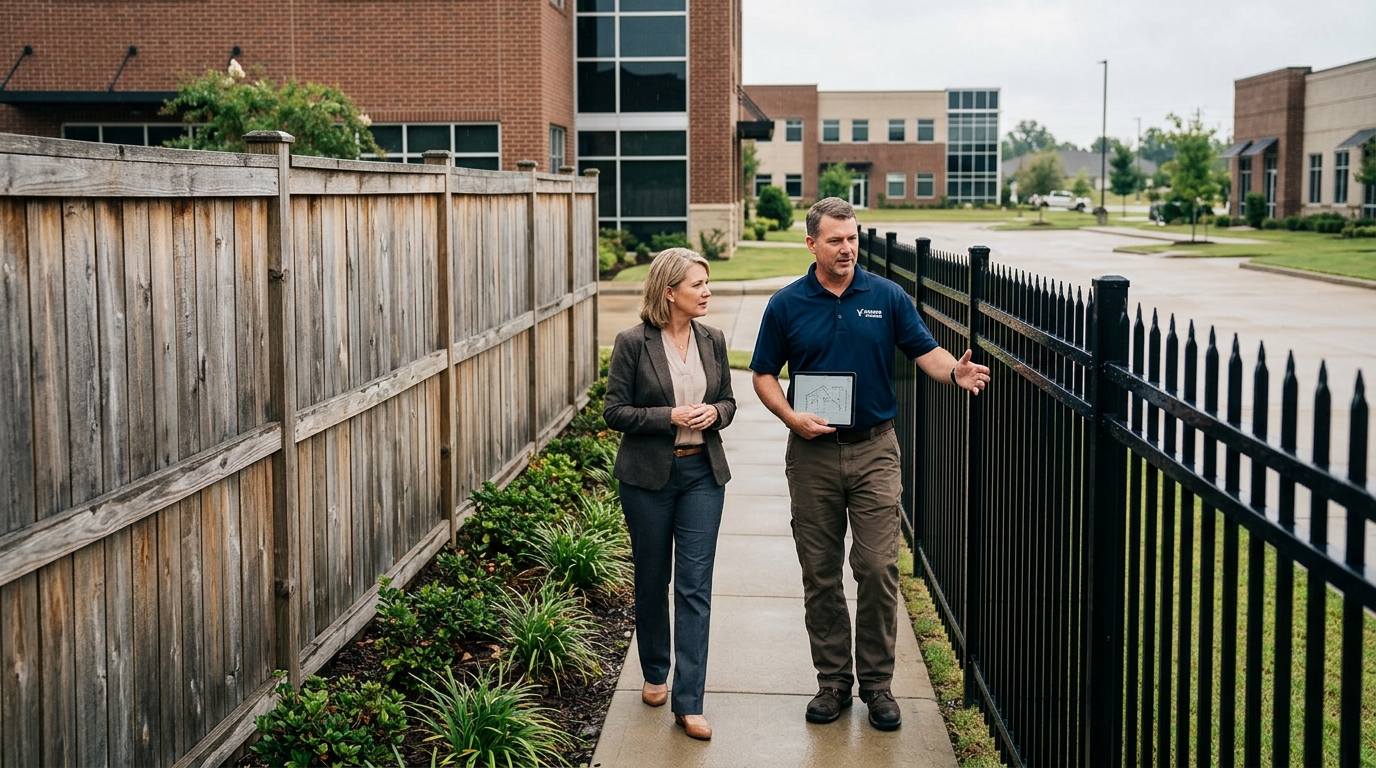
Aluminum fencing offers superior longevity, lower maintenance, and consistent aesthetics compared to wood for commercial properties. This guide examines the key benefits of aluminum over wood across maintenance, appearance, and security. It provides a detailed comparison to help property managers and business owners make informed decisions for their facilities. For additional details, review the About Vickers Fence Vickers.
Maintenance Requirements
Commercial properties require fencing that withstands heavy use and varying weather conditions without constant intervention. Wood fencing is a natural material that is susceptible to environmental degradation. It is prone to rot, warping, and insect damage, particularly in humid climates. Aluminum fencing is a synthetic metal alloy that does not rot, warp, or attract insects. This fundamental difference drives the long-term maintenance costs for property owners.
Weather Resistance and Durability
Wood requires regular sealing or staining to protect it from moisture and UV rays. Without this protection, wood fibers break down, leading to structural weakness. Aluminum is inherently resistant to moisture and does not absorb water. It is also resistant to rust when properly coated, making it ideal for outdoor commercial use. This durability means aluminum fences can last decades with minimal intervention.
Long-Term Cost Implications
The initial cost of aluminum fencing is often higher than wood. However, the total cost of ownership is typically lower over time. Wood fences often require partial or full replacement every 10 to 15 years. Aluminum fences can last 20 to 30 years or more. This longevity reduces the frequency of replacement projects and associated labor costs.
Professional Appearance
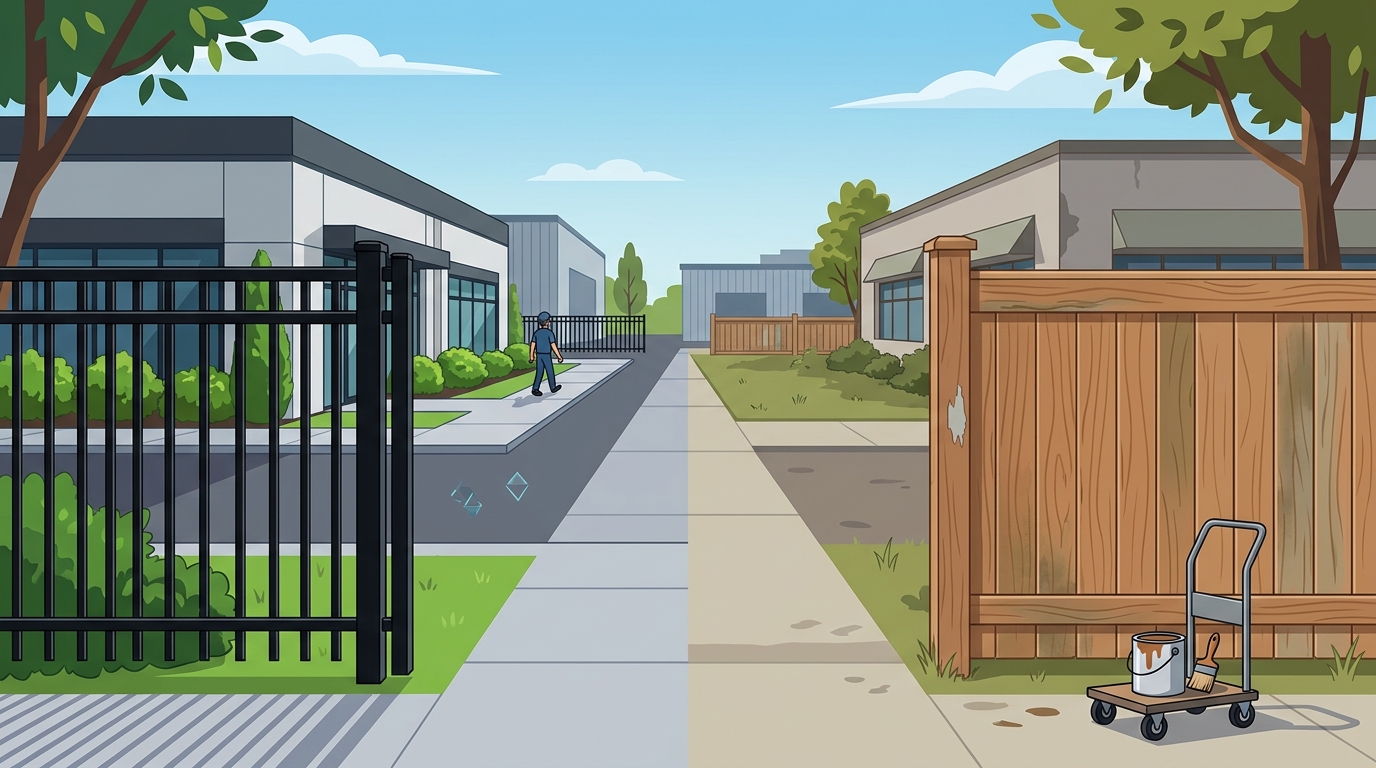
A commercial property's exterior sets the tone for customer perception and brand image. Wood fencing can look traditional and warm, but it is difficult to maintain a uniform appearance over time. As wood weathers, it changes color and texture unevenly. This can create a patchy or neglected look. Aluminum fencing is a manufactured product that offers consistent color and finish. It maintains its appearance year after year without fading or discoloration.
Consistency and Curb Appeal
Customization Options
Commercial properties often have unique layouts and design requirements. Aluminum fencing can be customized with different picket styles, heights, and gate configurations. It is also easier to install in complex shapes or around existing structures. Wood fencing can be customized, but it is more labor-intensive and less precise. The precision of aluminum fabrication allows for a cleaner, more polished final result.
Security Features
Security is a primary concern for commercial properties, including offices, retail stores, and industrial facilities. Wood fencing is a solid barrier that can provide privacy and deter casual trespassers. However, it is vulnerable to forced entry if the wood is compromised by rot or damage. Aluminum fencing is a strong, rigid material that is difficult to cut or bend. It provides a robust physical barrier that enhances perimeter security.
Structural Integrity
Aluminum posts and rails are engineered to withstand impact and pressure. They do not splinter or crack like wood under stress. This structural integrity ensures that the fence remains secure even if someone attempts to force their way through. Wood fences can fail at weak points, such as loose posts or rotted rails, creating security gaps.
Integration with Security Systems
Aluminum fencing can be easily integrated with modern security systems. It can support motion sensors, cameras, and alarm systems without compromising its structure. Wood fencing can also support these systems, but the added weight and mounting hardware can stress the material over time. Aluminum's lightweight yet strong nature makes it a versatile platform for security technology.
Comparison Table
| Feature | Aluminum Fencing | Wood Fencing |
|---|---|---|
| Lifespan | 20-30+ years | 10-15 years |
| Maintenance | Low (occasional cleaning) | High (sealing, staining, repairs) |
| Weather Resistance | High (no rot, no rust) | Low (prone to rot, warping) |
| Appearance Consistency | High (uniform finish) | Low (uneven weathering) |
| Security Strength | High (rigid, hard to cut) | Medium (vulnerable to rot/damage) |
| Initial Cost | Higher | Lower |
| Long-Term Cost | Lower (less replacement) | Higher (frequent maintenance/replacement) |
Key Takeaways
- Aluminum fencing requires significantly less maintenance than wood, saving time and money over the fence's lifespan.
- Aluminum does not rot, warp, or attract insects, making it more durable in various weather conditions.
- The consistent finish of aluminum fencing maintains a professional appearance without the need for regular staining or sealing.
- Aluminum is a strong, rigid material that provides a robust security barrier for commercial perimeters.
- While the initial cost of aluminum is higher, the long-term cost of ownership is often lower due to reduced maintenance and replacement needs.
- Aluminum fencing can be easily integrated with modern security systems like cameras and motion sensors.
- Wood fencing offers a traditional look but requires ongoing upkeep to prevent structural degradation and aesthetic decline.
- For commercial properties, aluminum fencing offers a balance of durability, aesthetics, and security that wood often cannot match.
Frequently Asked Questions
Is aluminum fencing more expensive than wood fencing?
Aluminum fencing typically has a higher initial cost than wood fencing. However, the long-term cost is often lower because aluminum requires less maintenance and lasts longer. Wood fences may need to be replaced or significantly repaired more frequently, which can increase the total cost of ownership over time.
How long does an aluminum fence last?
A properly installed aluminum fence can last 20 to 30 years or more. Its resistance to rot, rust, and insect damage contributes to its long lifespan. Wood fences generally last 10 to 15 years, depending on the type of wood and the level of maintenance provided.
Does aluminum fencing provide good privacy?
Aluminum fencing can provide privacy, depending on the style chosen. Solid panel aluminum fences offer similar privacy to wood fences. Open-style aluminum fences provide security and boundary definition but less visual privacy. Property owners can choose the style that best fits their privacy needs.
Can aluminum fencing be painted or customized?
Aluminum fencing comes in a variety of factory-applied colors and finishes. It can also be powder-coated in custom colors to match a building's palette. This customization allows for a cohesive and professional look that aligns with the property's branding.
Is aluminum fencing secure enough for commercial properties?
Yes, aluminum fencing is a strong and rigid material that provides a robust security barrier. It is difficult to cut or bend, making it a reliable deterrent for trespassers. It can also be integrated with security systems to enhance perimeter protection.
What is the main disadvantage of wood fencing for commercial use?
The main disadvantage of wood fencing is the high maintenance requirement. Wood is susceptible to rot, warping, and insect damage, which requires regular sealing, staining, and repairs. This ongoing upkeep can be time-consuming and costly for commercial property managers.
How does aluminum fencing handle weather?
Aluminum fencing is highly resistant to weather. It does not absorb water, so it is not prone to rot or swelling. It is also resistant to rust when properly coated. This makes it a durable choice for outdoor use in various climates, including humid and rainy regions.
Conclusion
Choosing the right fencing material for a commercial property is a significant investment in both security and aesthetics. Aluminum fencing offers distinct advantages over wood in terms of maintenance, durability, and consistent appearance. Its long lifespan and low upkeep requirements make it a cost-effective solution over time. For property managers and business owners seeking a professional, secure, and low-maintenance perimeter, aluminum is a compelling choice. Explore aluminum fencing options to see how this material can enhance your commercial property. Contact Vickers Fence for a personalized quote and expert advice on your next fencing project.