
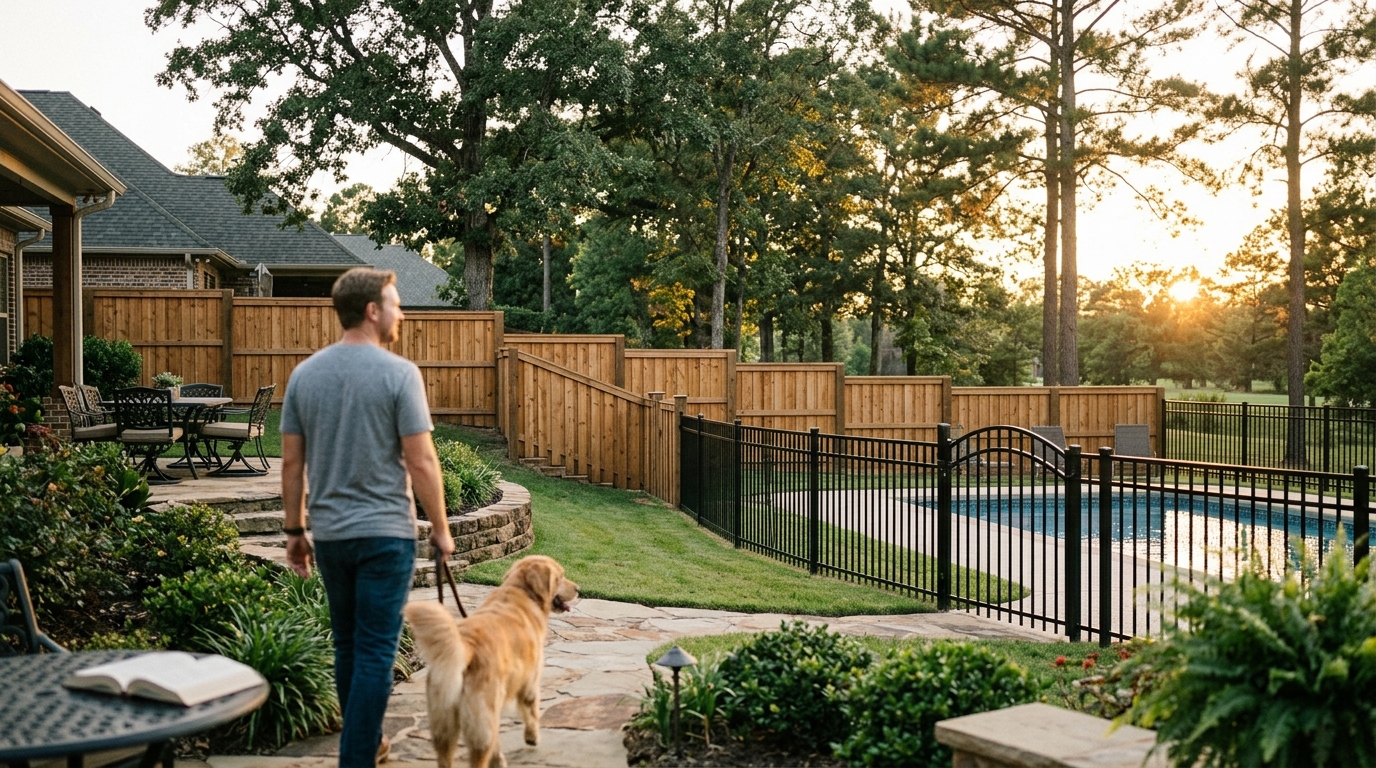
Custom fence design is important because it aligns the physical structure with the specific topography, access points, and functional needs of a property. A generic fence often fails to address slopes, drainage, or gate placement, leading to structural weakness or poor usability. By tailoring the layout to the land, homeowners ensure the fence provides the intended privacy, security, or aesthetic value without compromising the yard's natural flow.
Managing Slopes and Uneven Terrain
Standard fence panels are designed for flat ground, which makes them ill-suited for properties with significant elevation changes. When a fence line follows a steep slope, a rigid panel will either leave a gap at the bottom or bury the top of the fence in the earth. This not only looks unprofessional but can trap moisture against the wood, accelerating rot and decay.
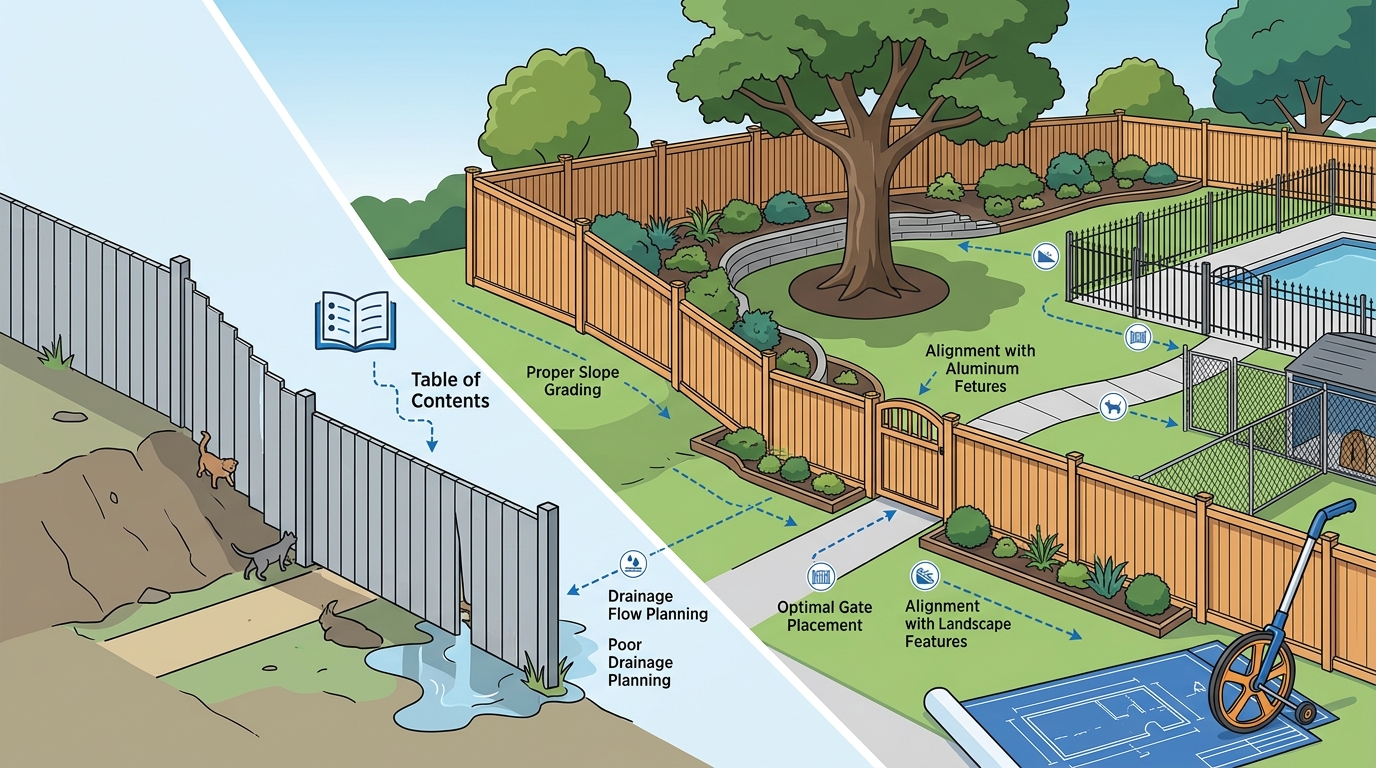
Custom design allows for techniques like step-down or grade-following installations. In these approaches, the fence line adjusts to the contour of the land, maintaining a consistent height relative to the ground level. This ensures that the structural integrity of the posts remains sound while preserving the visual appeal of the boundary. For properties in northwest Louisiana, where soil conditions can vary, adapting to the terrain is a critical first step in planning.
Optimizing Gate Placement and Daily Access
Gates are the most frequently used components of any fence, yet they are often an afterthought in generic installations. A gate placed in a convenient spot for the installer may be inconvenient for the homeowner, forcing them to walk long distances to access the backyard or driveway. Custom design prioritizes the homeowner's daily routine, placing gates where they are most needed.
Consider a property with a wide driveway and a separate side yard. A custom plan might include a wide driveway gate for vehicle access and a narrower walk gate for pedestrian use. This distinction prevents the need to open a large, heavy gate for simple tasks like taking out the trash. By mapping out how people and equipment move through the space, the fence becomes a functional part of the property rather than an obstacle.
Selecting Materials for Specific Zones
Not every section of a fence needs to serve the same purpose or use the same material. A custom design allows for a mix of materials to address different needs within the same property. For example, a homeowner might want solid wood privacy for the backyard but an open aluminum or chain link design for the front yard to maintain curb appeal and visibility.
This zoned approach also considers maintenance. Wood fencing requires regular staining or sealing, while aluminum and chain link are lower maintenance. By placing durable, low-maintenance materials in high-traffic or hard-to-reach areas, and more decorative materials in visible zones, the overall upkeep of the fence is reduced. This strategic material selection is a hallmark of a well-planned custom project.
Addressing Drainage and Utility Lines
Before any post is set, it is essential to understand the water flow and utility lines on the property. A fence line that blocks natural drainage can lead to water pooling against the structure, causing soil erosion and post instability. Custom design involves assessing the grade and identifying low points where water naturally collects.
Additionally, locating underground utilities is a critical safety step. Hitting a gas line or electrical cable during post installation can be dangerous and costly. A custom plan includes a utility locate service and adjusts the fence line to avoid these hazards. This proactive approach ensures that the fence is not only aesthetically pleasing but also safe and structurally sound for years to come.
How Vickers Fence Approaches Custom Layouts
Vickers Fence specializes in residential fence installation and repair across Greenwood, Louisiana, and the surrounding northwest Louisiana and East Texas regions. The team understands that every property has a unique line, layout, and purpose. Rather than offering a one-size-fits-all solution, Vickers Fence works with homeowners to talk through the specific details of their yard.
The process begins with a direct conversation about the property's needs. The team evaluates the line of the yard, considering slopes, trees, drainage, and existing structures. They help homeowners choose the right material, height, and gate placement to ensure the fence fits the property. This personalized approach ensures that the final result is not just a fence, but a functional and attractive addition to the home.
Key Takeaways
- Custom fence design adapts to slopes and uneven terrain, preventing structural issues and visual gaps.
- Strategic gate placement based on daily routines improves the usability of the fence.
- Mixing materials allows for different levels of privacy and maintenance in different zones of the yard.
- Assessing drainage and utility lines before installation ensures safety and long-term stability.
- A professional consultation helps align the fence with the specific topography and needs of the property.
- Custom design prevents the common pitfalls of generic fencing, such as poor access and water damage.
Frequently Asked Questions
Why is a custom fence design better than a standard installation?
Custom design accounts for the specific topography, access points, and functional needs of a property. Standard installations often ignore slopes and drainage, leading to structural and aesthetic issues. A custom plan ensures the fence fits the land and the homeowner's lifestyle.
How does slope affect fence installation?
Slopes require special techniques like step-down or grade-following to maintain a consistent fence height. Without these adjustments, rigid panels can leave gaps or trap moisture, leading to rot and instability. Custom design addresses these challenges directly.
Can I use different materials in different parts of my fence?
Yes, custom design allows for a mix of materials. For example, you might use wood for privacy in the backyard and aluminum for visibility in the front yard. This approach optimizes both aesthetics and maintenance requirements.
What should I consider regarding gate placement?
Gate placement should align with your daily routines. Consider where you need vehicle access, pedestrian access, and equipment entry. A custom plan places gates where they are most convenient, rather than where they are easiest to install.
Does Vickers Fence handle custom layouts in Greenwood, LA?
Yes, Vickers Fence specializes in custom residential fence installation in Greenwood, LA, and the surrounding areas. The team works with homeowners to design fences that fit the specific line and layout of their property.
How do I start a custom fence project with Vickers Fence?
You can start by contacting Vickers Fence for a quote. The team will discuss your property's needs, evaluate the layout, and help you choose the right materials and design for your space.
Conclusion
Custom fence design is essential for ensuring that your fence functions as well as it looks. By addressing topography, access, materials, and drainage, a custom plan creates a durable and practical boundary for your property. Vickers Fence brings this expertise to homeowners in Greenwood, LA, and the surrounding regions, ensuring that every fence is built to fit the specific needs of the yard.
To plan your visit, to discuss your project.