
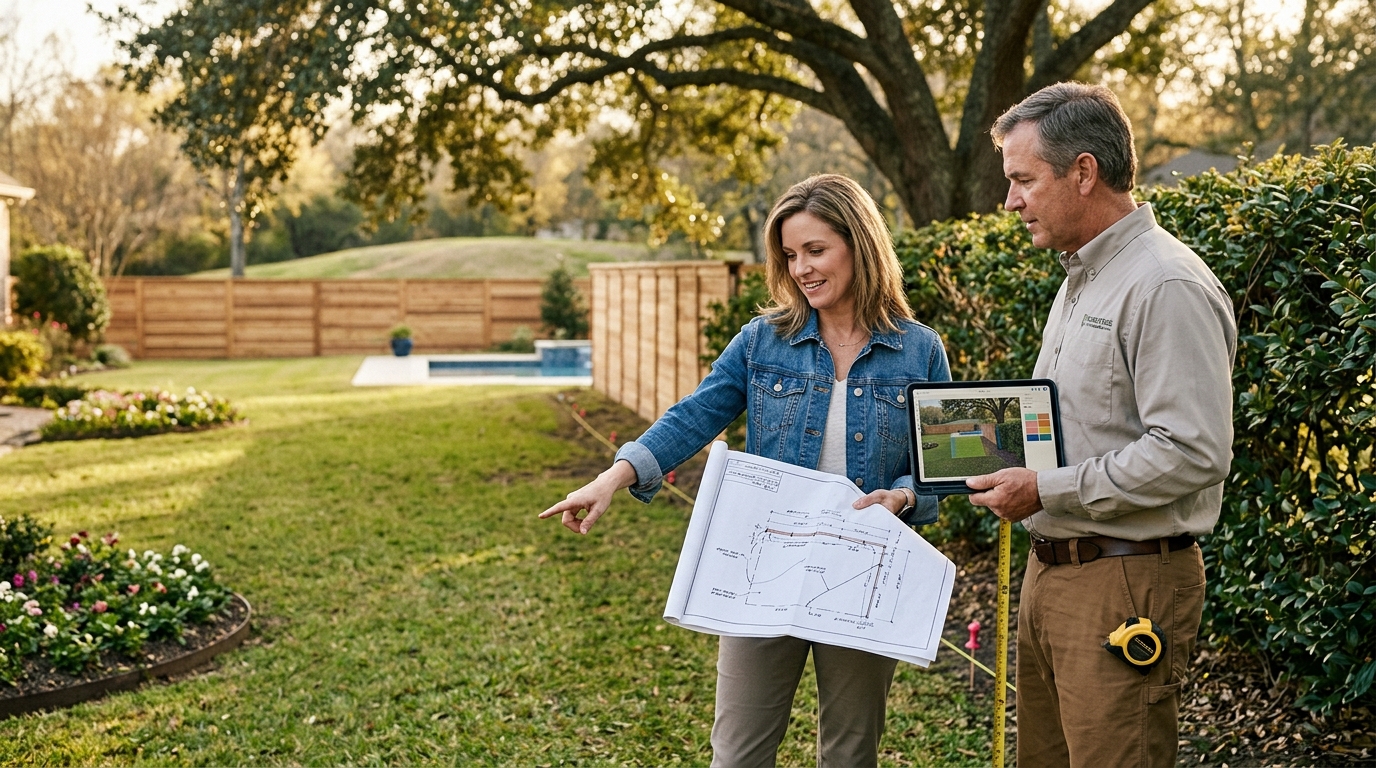
Designing a fence that truly fits your property requires more than picking a material. It involves mapping your yard's specific lines, slopes, and daily traffic patterns. Vickers Fence helps homeowners in Greenwood and northwest Louisiana turn these practical details into a functional, durable plan.
1. Map the Property Line and Boundaries
Start by confirming exactly where your land ends. A fence that crosses a property line creates legal and neighborly friction. Before any design work begins, verify the boundary markers or pull a survey if the line is unclear. This step ensures your fence sits entirely on your land and respects local setback requirements.
2. Assess Slopes and Drainage
3. Define the Primary Function
Decide what the fence must do for you. A privacy fence is a solid barrier designed to block sightlines, while a security fence is a perimeter structure intended to deter unauthorized access. Your primary goal dictates the height, material, and gate placement. If you need both privacy and pet containment, the design must satisfy both requirements simultaneously.
4. Plan Gate Placement and Access
Place gates where you actually walk or drive. A gate that is inconvenient to reach will be avoided, leading to wear on other parts of the fence. Consider where you enter from the driveway, where you access the backyard, and where you need room for lawn equipment. Proper gate placement makes the fence part of your daily routine rather than an obstacle.
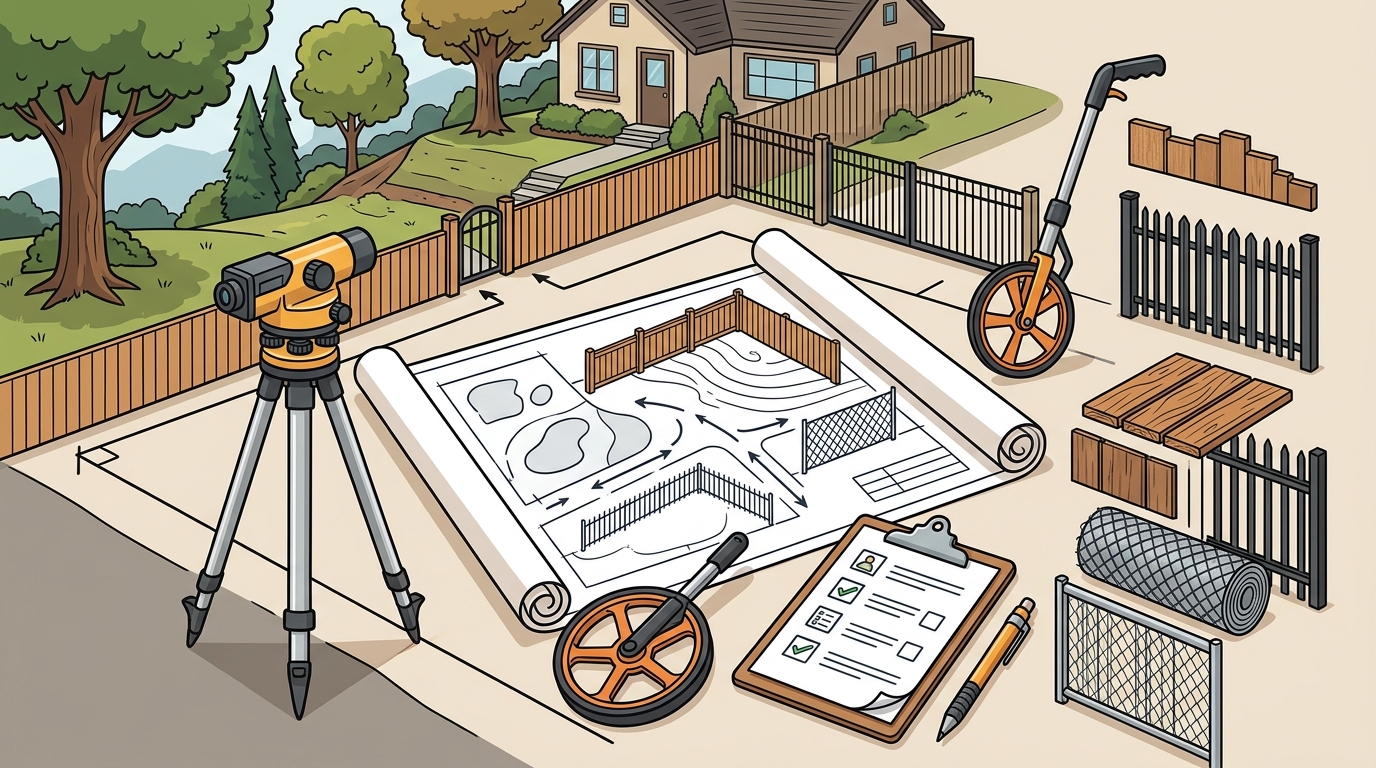
5. Choose Materials for the Local Climate
Select materials that withstand northwest Louisiana weather. Wood fencing is a natural choice for privacy but requires regular maintenance to resist humidity and rain. Aluminum fencing is a low-maintenance option that resists rust and corrosion in humid climates. Matching the material to your climate and maintenance willingness ensures the fence lasts for years.
6. Consider Visibility and Aesthetics
Balance privacy with the look of your home. A solid wood fence creates a warm, traditional appearance, while an open aluminum or chain link design keeps the view clear. Think about how the fence will look from the street and from inside the yard. The right aesthetic choice enhances curb appeal without making the property feel closed in.
7. Review Local Codes and Permits
Check regulations before you break ground. Many municipalities have specific rules about fence height, material, and placement near property lines. Vickers Fence helps clients navigate these local requirements to avoid costly changes after installation. Confirming compliance early keeps the project on schedule and within budget.
Choosing the Right Approach
Use these steps as a checklist before requesting a quote. Start with the property line and function, then layer in slopes, gates, and materials. This structured approach ensures your fence solves a real problem and fits the way you live.
Frequently Asked Questions
How do I know where my property line is?
Check for existing markers or consult a local surveyor. If you are unsure, a professional survey provides the most accurate boundary definition for your fence plan.
What is the best material for a humid climate?
Aluminum and treated wood are both strong options. Aluminum requires less maintenance, while treated wood offers a traditional look but needs periodic staining or sealing.
Do I need a permit for a fence in Greenwood, LA?
Local regulations vary. It is best to check with the local municipality or consult a local contractor who is familiar with current zoning rules and setback requirements.
How high should a privacy fence be?
Most privacy fences are six feet tall. Some areas allow eight feet, but you should verify local height limits before finalizing your design.
Can I add a gate to an existing fence?
Yes, gates can often be added to existing fences. A professional can assess the structure to ensure the new gate is properly supported and functions smoothly.